

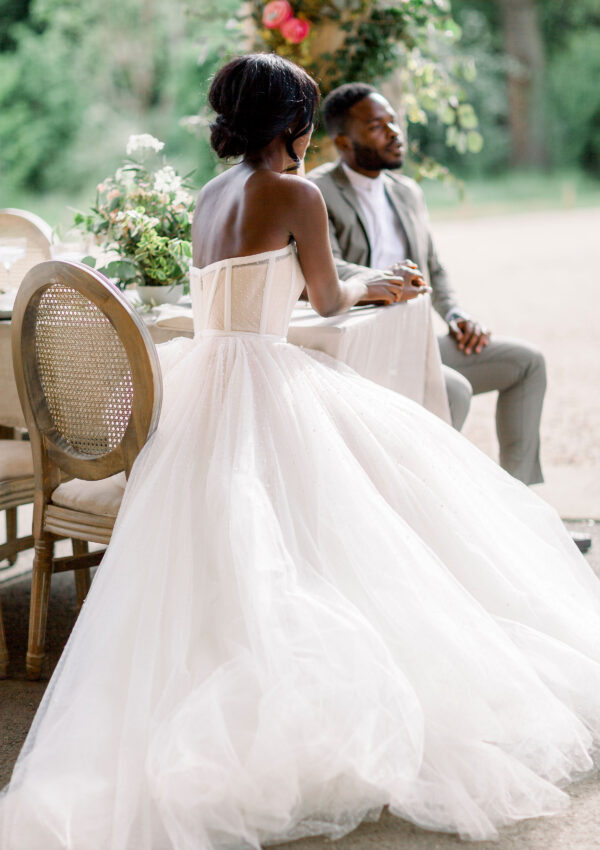
The morning of my wedding day, I made a harrowing discovery. My mother was trying to convince my in-laws that my wedding dress was so ugly that they had to convince me (because I have a great relationship with them) to go to the shop where she had reserved a dress for me the night before. When it didn’t work with my in-laws, she moved on to trying to convince my husband. Upon learning this, I felt my heart physically break into pieces. I had experienced heartbreak before, but this, this was different. The woman who had given birth to me was actively trying to sabotage my wedding day so that she could choose my dress. She did not care that I was crying uncontrollably; she just wanted to have her way.
Later that day, the same woman, my mother, walked me down the aisle, an aisle I almost missed out on because every fibre of my being wanted to cancel the wedding. I had taken it as yet another sign that marriage was not for me. I grew up terrified of the idea of marriage because of my parents’ and the other marriages I was privy to in my Congolese community, and I wanted no part of it. So, when at every step of the journey, my introduction, my traditional wedding, and now the white wedding, my mother threw a wrench in the works, I thought it was God telling me to run away from the institution as a whole. It was my husband and in-laws’ prayers and encouragement that literally picked me off the floor. It was God who gave me the strength to make a decision that ultimately turned out to be the second-best one I have made in my life, after following Christ.
Despite everything, my mother walked me down the aisle. I gave her that honour because she is the parent who raised me, the one who put her entire life on hold to raise eight children. To me, she had earned that privilege. I set my hurt aside and let her enjoy the moment. My wedding, as insane as it was, was not the reason I went no contact with my mom, but it was the reason she lost my trust entirely. From that day onward, I no longer felt safe around her, and for the next few years, most of my communication with her took place with my husband around because he was my shield.
I went no contact with my mom in 2022, roughly three years after the wedding. I had finally ended 2021 feeling confident in my skin, feeling beautiful, and having the courage to post my face on Instagram stories without filters. One morning in January, I woke up to a message from my mother making negative comments about my appearance. I pushed back a little, hoping she would get the point and drop it, but she continued with another piece of “advice”. At that moment, I felt my confidence DROP. I just sent her a quick thank you for your suggestions, but I’m okay with how I do things. The following day, I blocked her.
I was, in fact, not okay. I was breaking. I grew up with incredibly low self-esteem because of my mother’s commentary on my appearance. In fact, I never considered myself beautiful until my pregnancy in 2023. I proceeded to write her a strongly worded letter to explain my feelings. I wrote the letter as respectfully as I could, but to the typical “African eye”, a child giving their parent a piece of their mind, regardless of how it is formatted, is always disrespectful.
All of that took place before January 15, 2022. A year that had started at my highest, I was now facing the bottom of the barrel. With my mother’s words echoing in my mind continuously, I felt hideous. Unfortunately, I had a very public-facing job that required travel and leading meetings, sometimes with hundreds of people. I started wearing makeup every day, even when I was home. I felt I needed to cover up. My husband’s admiration of my beauty became an annoyance; I refused to believe him when he told me I was beautiful. Surely if my mom didn’t think it, there was no way it could be true. It wasn’t until I started having panic attacks about my appearance whenever I had to show my face that I realised it was time to run back to therapy to try and heal from this mother wound.
I knew that in the fall of that year, my husband and I would be trying to conceive, and I didn’t want to carry that baggage into our journey. I did not want to even risk passing on my trauma to my child. Most importantly, after years of debating if motherhood was even for me, I had finally decided that it was, and I was afraid that if I did not work on my wounds, I would change my mind for fear of repeating the same parental mistakes on my own child. So, I ran back to therapy. It took me some time to bring God into my healing process because I felt ashamed. Being a mother now, I realise just how important it is to treat your children with all the love and kindness in the world. Earthly parents are our first models of God’s love, and I grew up thinking that God didn’t love me. And in those early months of 2022, I was taken back to that place.
Going no contact with my mom was not easy. I have seven siblings; some respected my decision, others did not. However, it was a decision I eventually became comfortable with over time. You see, we were raised on the notion that our parents are our gods on earth and that we owe them unquestioning obedience until death, if we wanted things to go well for us. It was confused with the commandment to honour your father and mother so that it may be well with us and that we may live long on the earth. When I finally brought God into my healing journey, I spoke with my pastor at the time, who made me understand something that shifted the way I now view my relationship with both my parents. I used to think that I was a disobedient adult child. African parents love to shout Ephesians 6:1: “Children, obey your parents in the Lord, for this is right”. My pastor asked me if I was a child. I was not. I was a thirty-one-year-old married woman. He proceeded to explain to me that Ephesians 6:1 applies to children, and that I was no longer a child.
That revelation felt like the weight of the world lifting off my shoulders. For years, I thought that I was a rebellious, disobedient child whenever I made life decisions my parents disapproved of, even though they were right for me. My pastor then had me read Ephesians 6:2-3, “Honour your father and mother”—which is the first commandment with a promise— “so that it may go well with you and that you may enjoy long life on the earth.” He made me realise that I am not called to obey my parents my whole life, but I am called to honour them my entire life. I asked what that looked like, and he said you honour your parents by obeying God and being your own person before God, living a life that is pleasing to Him. Because after all, as an adult, you are accountable for your own life in God’s eyes.
In 2022, honouring my mom meant going no contact so that her dysfunction did not torpedo whatever fragments of self-esteem I had left, my relationship with my husband, and our future, as I was seriously doubting whether or not I could bring life into the world if I carried so much hurt. It was not to punish my mom; I did it to save myself. I had to piece my heart back together and guard it. I felt a deep grief month after month throughout 2022. I was grieving somebody who was still alive, grieving for the little girl in me who grew up not feeling cherished, and grieving for the adult in me who was growing up without a mother she wanted in her life. I once saw a woman and her teenage daughter at the grocery store; she was incredibly affectionate towards her, and they seemed to have the most beautiful relationship. It broke me, literally. I felt my eyes starting to water, and my heart, bursting at the seams with envy. I remember going home that day and crying for what felt like hours. I was craving to be mothered, while knowing I will likely never have the mother I have always dreamt of.
Little by little, the dark cloud over my head started lifting, and I began to feel empathy for my mom, which ultimately led to my forgiving her. In November that year, I flew to Canada to see my mom, who had suffered a loss and was devastated. Regardless of what was going on between us, I put it aside to be there for her. My brother took the opportunity to orchestrate and moderate a chat between us, something I’ll forever be grateful for. During that conversation, I asked my mom why she did what she did on my wedding day. She responded that she wanted what she wanted. I asked her if having her way was worth breaking her daughter’s heart, causing near irreparable damage. She said at the time, yes. The conversation continued into the events that transpired that year and my decision to go no contact. I explained to her that while I forgave her, I had lost the ability to feel emotionally safe around her. All in all, it was a fruitful conversation.
I returned home to London, and a few months later, I became pregnant. As soon as we could, we found out the sex of the baby—a girl. When I read “Female” on that piece of paper, my heart sank a little (a lot). I was still not healed. How was I to raise a daughter without damaging her? I asked my therapist almost every session, expressing my fears of perpetuating generational trauma. To the glory of God, pregnancy greatly aided my healing process. I was fiercely protective of my baby girl, knowing that even if I had to be in therapy for the rest of my life to be a good mother, I would. I knew I would do everything in my power so she wouldn’t have to heal from my mothering. One of the main things that helped with that is my husband. My therapist reminded me that I feared motherhood because I looked at it through the lens of married single motherhood, and that it was not the case for me. My daughter was planned and wanted by both her parents, and having been a mother for two years now, I can easily say that God blessed me with a top-tier man. Watching their daddy-daughter relationship is one of the most beautiful privileges of my life.
Pregnancy was the first time I looked at myself in the mirror and felt beautiful. It was the first time in my 32 years of life that I believed myself to be beautiful. I could feel my self-esteem grow little by little. Unfortunately, at some point during my pregnancy, I had to go no-contact with my mother again. This one was hard because nothing makes you need mothering like pregnancy. It was in that moment that God reminded me of all the aunties He had blessed me with, and one by one, they tried to fill that void, with God filling the gap that remained.

I unblocked my mom on the day I gave birth, and life went on. A month after my daughter was born, she came to help. I was grateful for my husband because one thing about him is that he is my shield. He made sure things went as smoothly as possible during her visit.
Two years into motherhood, and I’m glad I made the two decisions to go no contact with my mom when I did. That deep grief now feels like a form of freedom and healing. I gave myself space to heal because there is no gold medal for continuing to be hurt by someone who does not have the capacity to stop hurting you. I am free from the “but you only have one mother/father” guilt trips. I have also taught my parents that I am not afraid to set and enforce boundaries to protect myself.
Being a mother now puts so much into perspective. I know that being a good mom means being my daughter’s biggest cheerleader, not her first bully. It means being her protector and confidante. I know that I have the capacity to be a great mom because of how much my husband loves me; all I have to give to the fruit of our union is love. I have a thriving career, friends, and interests outside of motherhood, things that make me a well-rounded individual. I cannot make my daughter the centre of my world because that will breed contempt when she grows up and chooses her own path. She is my daughter, but I do not own her. She is God’s child, I am her earthly custodian. I must seek God and ask Him for His will for her life, so that I do not impose my own will on her and become angry, calling her ungrateful when she decides to follow her dreams. I know that she will not always need me, but I would love for her to want me to continue playing a significant role in her life when she grows up. I love watching vlogs of adult women enjoying girls’ holidays with their mums, I want that for us.
For those reasons, I recognise it is my duty as the adult in the relationship to nurture a relationship with her—a relationship built on love, trust and respect. I grew up in a culture where children are not respected, and I’m glad to know how to change that. I will not repeat the mistake of making my child, who did not ask to be born, the keeper and maintainer of our relationship. I am her mother and our relationship is something I will protect with every fibre of my being.
I would not have come to this conclusion had I not decided to go no contact with my mom; heck, I likely would still be child-free. Going no contact with a parent is not a trend. For many, like myself, it is one of the most complicated decisions we will have to make in our lives, and it’s often the last resort when we feel unsafe- and yes, emotional safety counts too. Whenever someone shares that they’re going through a tough time with a parent or family member, I always try to explore every possible solution. I never advise anyone to go no contact because it SUCKS. It’s incredibly heartbreaking. But I understand that sometimes it’s what must be done for the sake of self-preservation. If you’re reading this and are currently in a no-contact situation with family, I’m praying for you.


The no contact rule is tough but essential for healing. It helps create space to regain clarity and rebuild self-worth after difficult breakups.